Growing and Caring for the American Maple
The history of introducing this North American species into cultivation spans almost four hundred years. It is a story of suffering, adaptation and, finally, a triumphant march through the cities, villages and shelterbelts of the entire Eurasian continent, all the way to the Arctic Circle. The abundant self-seeding of the American maple overruns urban lawns and, since the mid-19th century, natural habitats as well, suppressing native plants. As a result, landscape gardeners have branded it a “weed tree” and a “killer maple” and excluded it from the list of species recommended for planting in populated areas. Moscow’s Department of Natural Resources even urges people not to buy seedlings for their country plots, claiming that the plant “does not possess high ornamental and aesthetic qualities.” But here, as they say, the officials in charge of nature management have “thrown out the baby with the bathwater.”
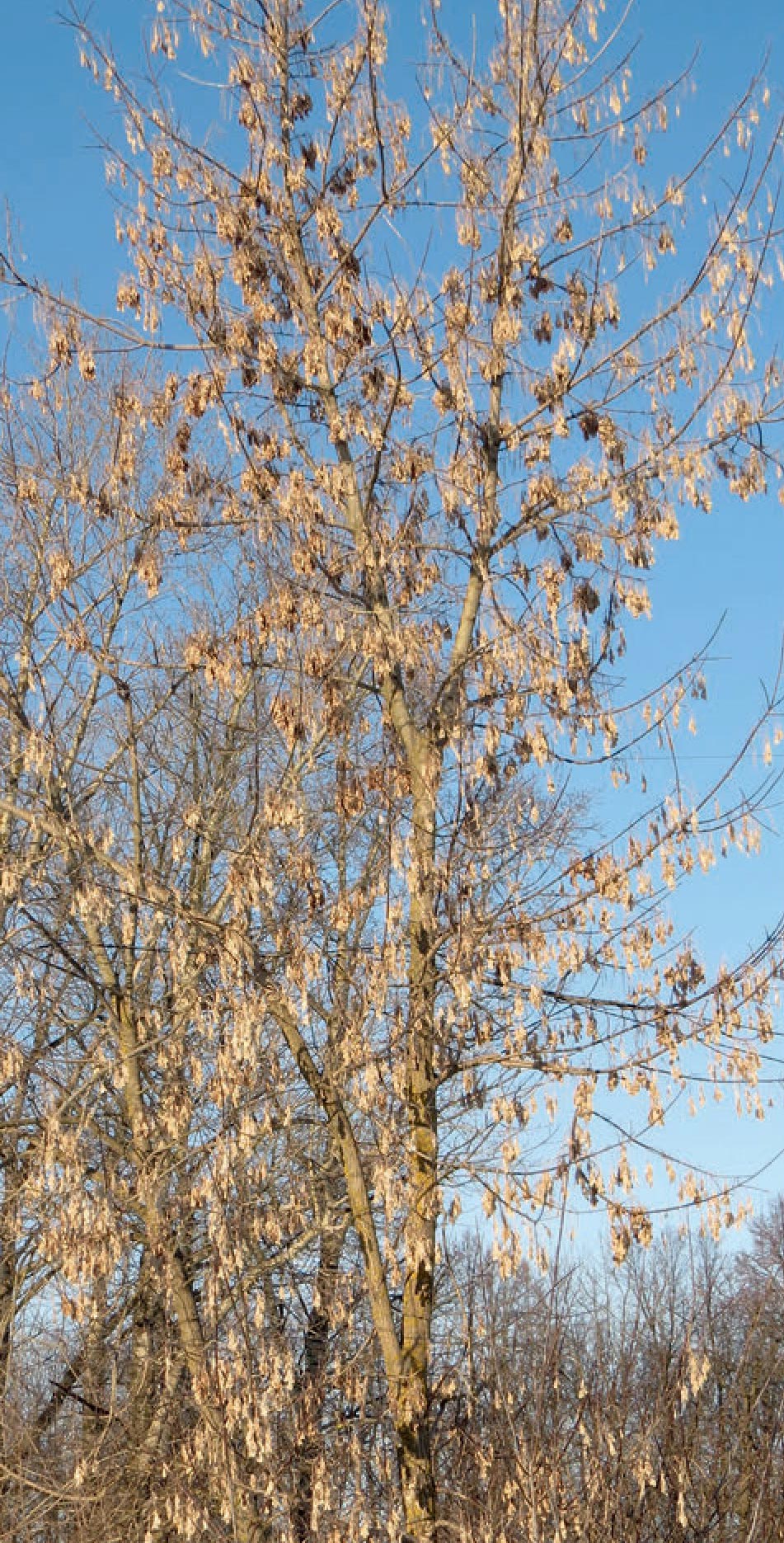
The American maple
The cultivars of the American, or box elder, maple (Acer negundo) are highly ornamental, but require specific care to maintain their striking appearance. Specimens propagated from cuttings (growing on their own roots) are best cultivated using a coppice-growing method. The reason is that the largest and most beautiful leaves grow on vigorous young shoots — water sprouts that appear after severe pruning. Young trees are cut back to a height of 10–20 cm, and this is then repeated every year, leaving one or two pairs of buds from the new growth. Once a large stump has formed, it is ruthlessly sawn down — the American maple will not let you down and will produce a fresh cluster of water sprouts right from the base. Coppice cultivation is useful for another reason: it makes it possible to fit this potentially large tree into a small plot, turning it into a compact shrub that produces no seeds.
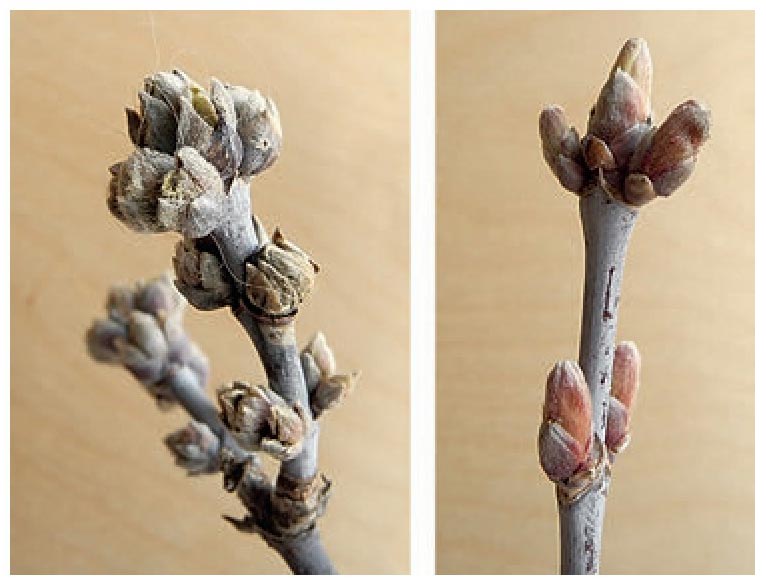
The American maple is strictly dioecious: male flower buds on the left, female flower buds on the right.
It is important to choose the right time for the operation. Traditional spring pruning may fail because the sap flow in maples is extremely vigorous and begins earlier than in fruit trees: in March, or even February, when snow may still be lying on the ground and not everyone will feel like working in the garden. To prevent the trees from “weeping,” they should be pruned after the active sap flow has ended, when the leaves begin to unfold.
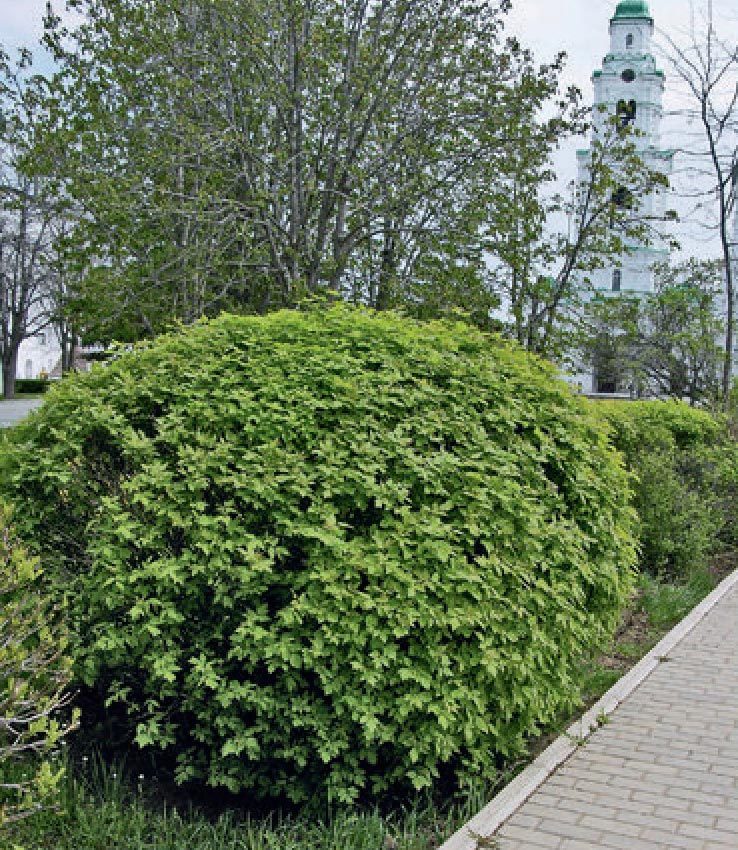
The shaped pruning of the coppice growth looks impressive, but its longevity is questionable.
Cultivars are often sold in standard form. A standard can be formed from one of the shoots of a plant growing on its own roots, in which case pruning presents no difficulties. In nurseries, however, attractive “balls on sticks” are usually produced by grafting a cultivar onto a wild seedling. In this case, care must be taken not to cut or break off the scion. The American maple is naturally rather brittle. Thanks to this characteristic, it often breaks in the wind and falls onto city streets, which is how it earned its nickname “killer.” Therefore, a grafted cultivar, at least one grafted onto a tall standard, is not the best choice to purchase: such a specimen may prove short-lived.
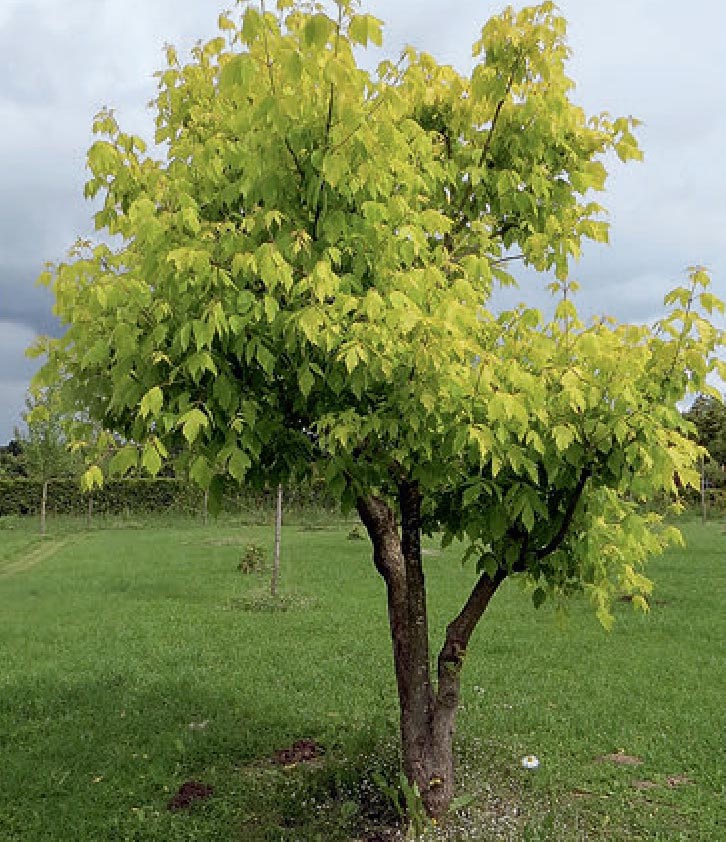
Own-rooted cultivar Kelly’s Gold, trained as a tree: the shoots are shortened at the tops of the trunks.
The persecution this maple species is now subjected to hinders its further use in public landscaping, but what has already been planted remains. If planting material cannot be obtained from a nursery, all you need to do is find a growing tree — a source of cuttings.

Cultivar Argenteovariegatum (Variegatum).
Rooting cuttings rarely works with maples, but the American maple is one of the few exceptions. In nature, it actively uses vegetative reproduction to colonize floodplain forests: a fallen tree becomes covered with silt, takes root and produces an entire grove of suckers.
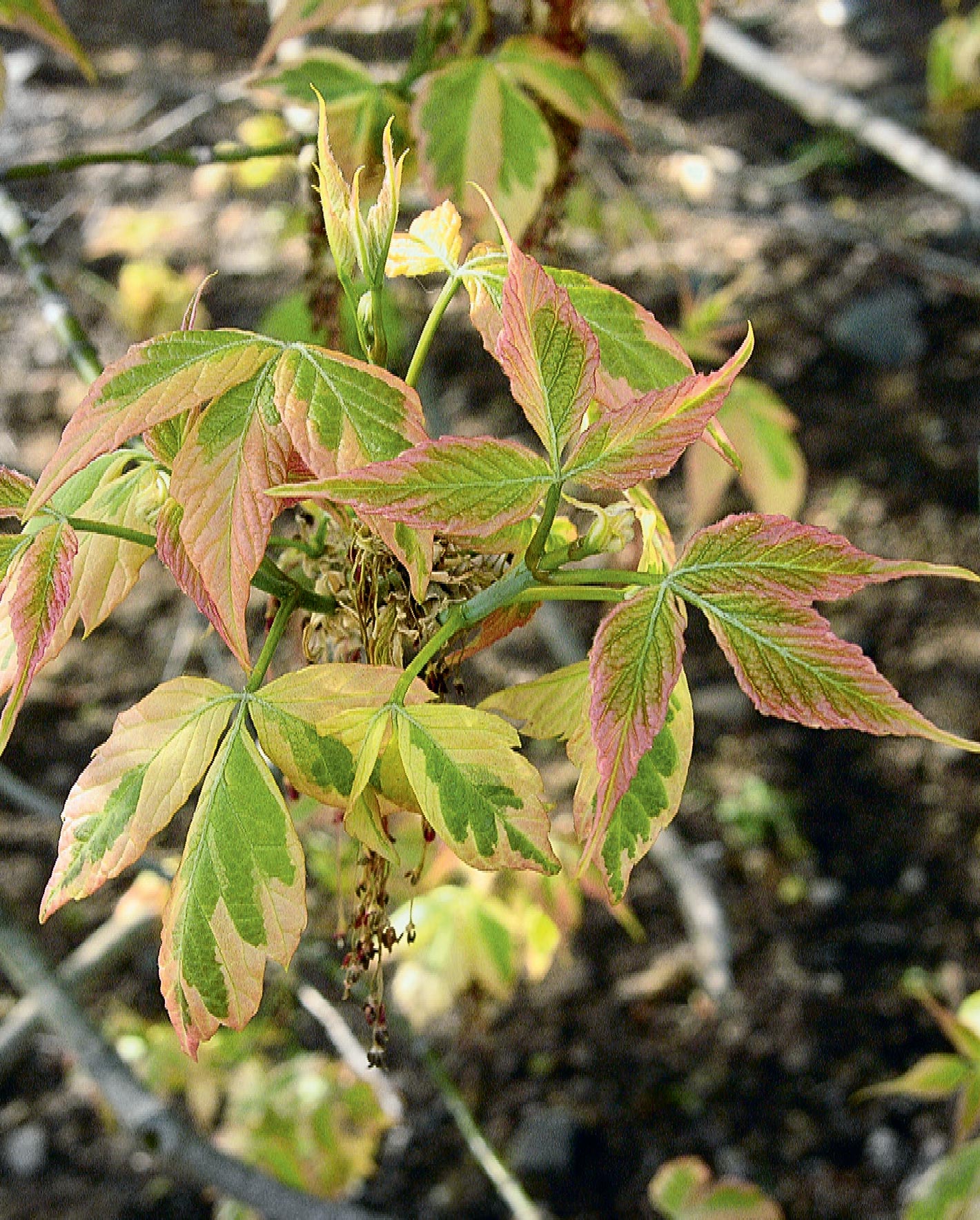
Cultivar Aureomarginatum — a male clone, as are many other cultivars.
Semi-hardwood cuttings are taken, as usual, in late June or early July. Interestingly, a rooting stimulant (IBA is usually recommended for maples) hardly increases the rooting rate, which is quite good even without it.
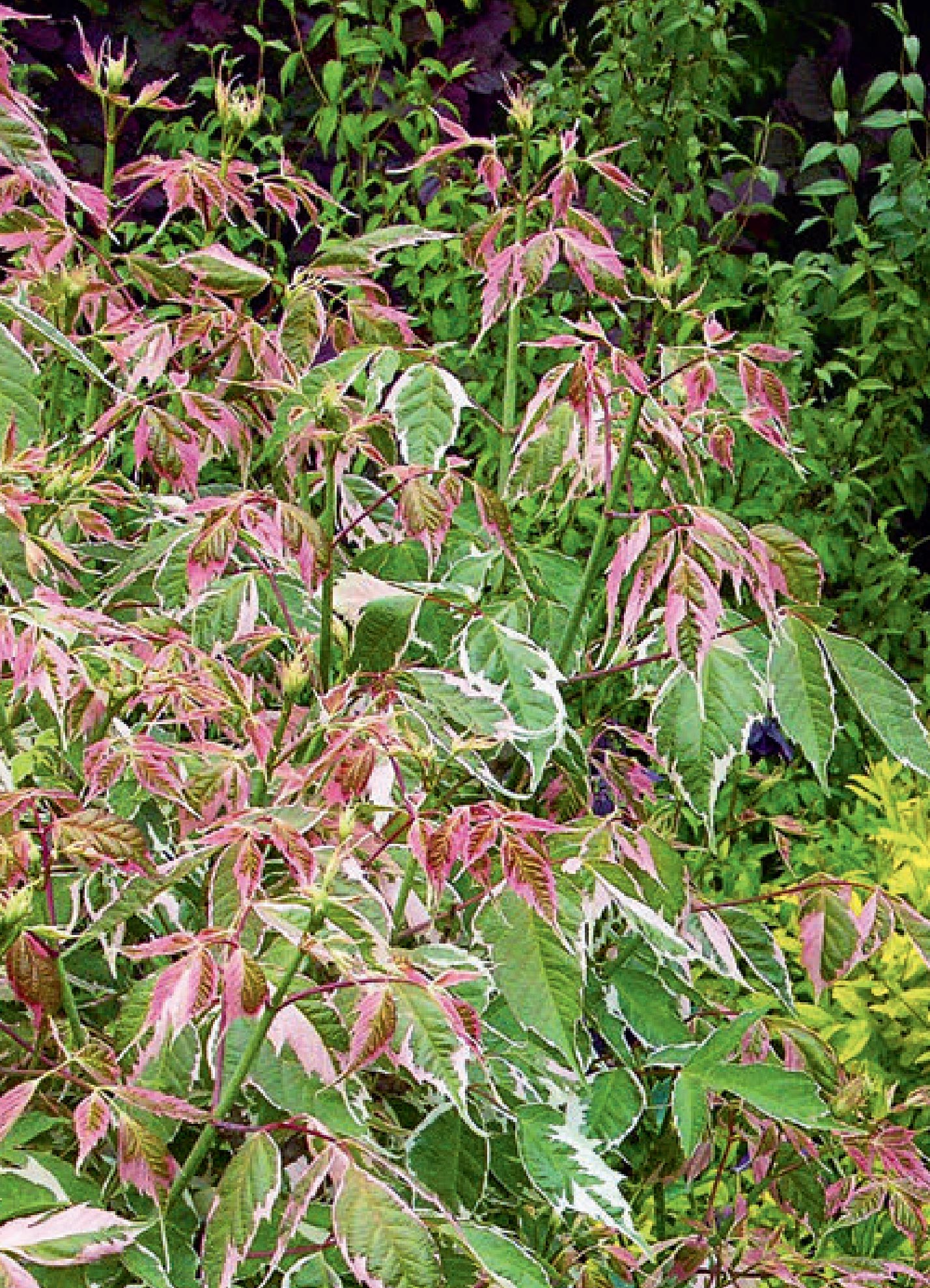
Cultivar Flamingo — the most beautiful and popular.
Grafting is the most popular method of propagating ornamental forms of maple. The same species should be used as the rootstock, since maples exhibit pronounced tissue incompatibility, but collecting seeds or digging up ready-grown seedlings of the “American” maple is hardly difficult. By the way, this thoroughly studied tree has a mystery of its own: why does it leave its seeds hanging on the branches until spring? For the seeds to germinate, they need to spend three or four months in cold soil beneath the snow. Those that have hung on the tree throughout the winter will no longer germinate. Yet somehow, the tree still manages to become a weed.
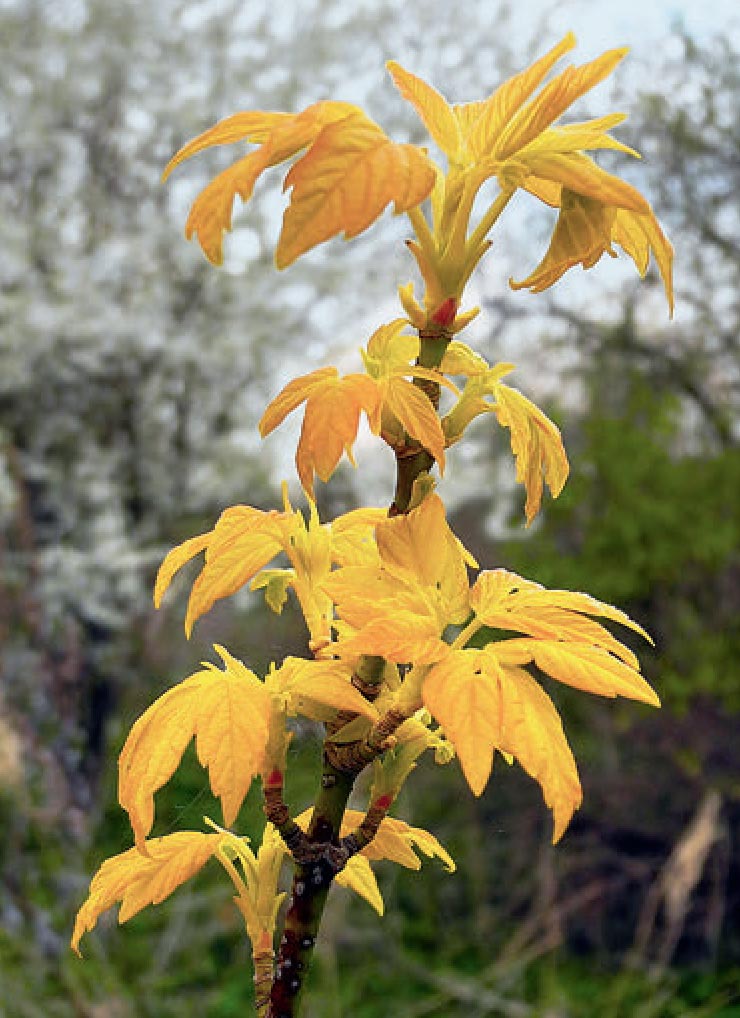
Kelly’s Gold — one of several yellow-leaved cultivars.
Budding is used more often, at least in commercial propagation. Buds are grafted onto young shoots of two- or three-year-old seedlings at the place where a leaf, shoot or axillary bud once grew; this is removed beforehand. The procedure can be carried out in spring and summer, and, with a suitable facility, even in winter. Either traditional T-budding or chip budding can be used. The latter method is considered preferable when sap flow is pronounced. Ideally, the bud shield — a piece of bark carrying the scion bud — should be cut with a thin layer of wood attached.
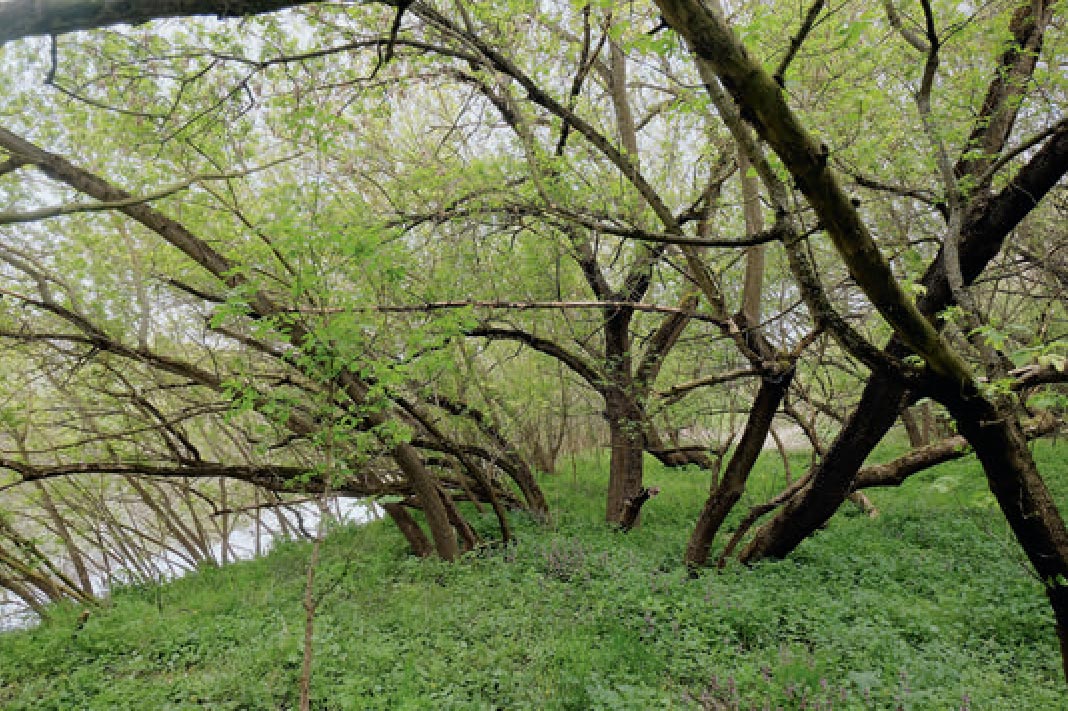
American maples in a floodplain forest.
Cuttings from which buds for spring budding are taken are prepared in winter. In spring, grafting begins when active sap flow starts to subside, as indicated by the beginning growth of the rootstock shoots. In summer, grafting is carried out from mid-July to the end of August. By this time, the grafting bud, or eye, has usually formed well and is ready to “sleep” firmly until the following year. It is cut from shoots of the current season, specifically from their middle section.
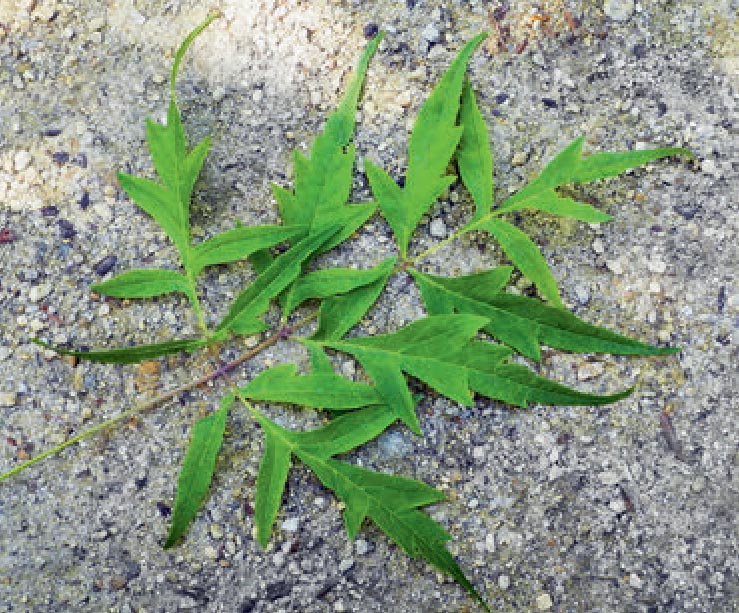
Leaf of the Tadeusz Szymanowski cultivar.
Even earlier grafting can succeed — from mid-June, when fully formed buds have already appeared at the bases of the scion shoots. In such cases, the grafted buds often wake up and begin growing after two or three weeks. In the central part of the country, however, these untimely shoots may not have enough time to mature and will freeze during the winter. In regions with a long, warm autumn, though, this approach may prove successful.
Grafting with a cutting (whip-and-tongue grafting) is carried out in spring on one- to three-year-old shoots of young plants, at the same time as budding. Whether the scion has taken can be seen after two or three weeks. In addition to the physiological condition of the plants, weather conditions have a major influence on the outcome. Cool, damp weather is ideal, while heat and drought can destroy all your efforts. It is therefore useful to repeat the grafting several times during the recommended periods, increasing the chances of success.
Source: Natalia SHEVYRYOVA, Main Botanical Garden of the Russian Academy of Sciences. Photos by the author. Science and Life, 2026-1
Category:
plants trees agriculture 
Soy, scorched by the blazing sun, is one of the most ancient crops of world agriculture. It has traveled a long path from a modest wild plant to one of the most valuable cultivated crops.
... Read more
Humanity has never given up on the dream of Martian gardens, and step by step, we are edging closer to that goal. One of those steps was a joint experiment by the D.I. Ivanovsky Academy of Biology and Medicine of the Southern Federal University (SFedU) and the Institute of Biomedical Problems of the Russian Academy of Sciences. Researchers assembled a consortium of ten microbial strains and sent them into near-Earth orbit aboard the Bion-M No. 2 spacecraft. Their aim: to see how a complex community of bacteria and fungi withstands the extreme conditions of spaceflight — heightened radiation, weightlessness, and heavy g-forces. At the orbit of 370–380 km where Bion-M No. 2 flew, radiation levels are over 200 times higher than Earth’s natural background and 30% higher than aboard the International Space Station.
... Read more
Animal communication is studied not only to learn more about the animals themselves, but also to understand how human language originated. This refers, of course, to vocal communication: how it occurs, what neural mechanisms are involved in it, and what exactly is contained in the vocal messages animals exchange. In this regard, chimpanzees receive special attention — after all, from an evolutionary perspective, they are our closest relatives. The vocal signal repertoire of chimpanzees is quite broad, and within it, one can distinguish between simple and complex signals. But what does "complex signals" mean? Various animals, not just chimpanzees, combine sounds together, but it is usually thought that the resulting complexity is purely superficial, that the sounds are combined randomly. It has been shown for birds and primates that new meaning emerges in their sound combinations. However, this new meaning is also formed by simple addition, similar to how in the phrase "black cat" the new meaning arises from the simple combination of "black" and "cat."
... Read more Български
 Deutsch
 ქართული
 English
 Polski
 Română
 Русский
 Türkçe
 Suomi
Suomi Svenska
 Українська

 (0)
(0)